
To diagnose illnesses and guide treatment options, healthcare practitioners must precisely establish a patient’s condition. In vitro diagnostics (IVD) specific equipment is utilised on biological samples from the patient to perform diagnosis Self-tests kits for pregnancy and blood glucose testing for diabetic patients are among some of the most common testing devices available. Sophisticated diagnostics can be done at professional facilities, which are being used widely to test for the Covid-19 virus. In order to regulate the devices manufacturers must submit research showing the accuracy and usefulness in diagnosing a certain ailment.
The advanced technologies such as polymerase chain reaction (PCR), and next-generation sequencing (NGS) facilitate easy access to point-of-care diagnostic tests and offer quick and valid test results. The impact of the COVID-19 pandemic has also led to the in vitro diagnostics industry witnessing a sharp rise in demand for a polymerase chain reaction, next-generation sequencing, serology based rapid–test products. Additionally, the adoption of self-test and point-of-care devices is subsequently increasing in demand. With budgets shrinking healthcare providers are under greater pressure than ever to deliver value, optimizing procedures and providing cost-and time-efficient care.
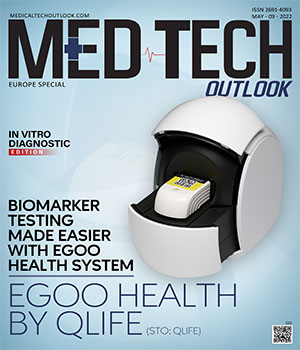
To help companies navigate through the best-of-breed in vitro diagnostic solution providers, MedTech Outlook has compiled a list of the most prominent In Vitro Diagnostic Solution Providers in Europe.
We present to you MedTech Outlook Europe’s “Top 10 In Vitro Diagnostic Solutions Providers in Europe - 2022.”